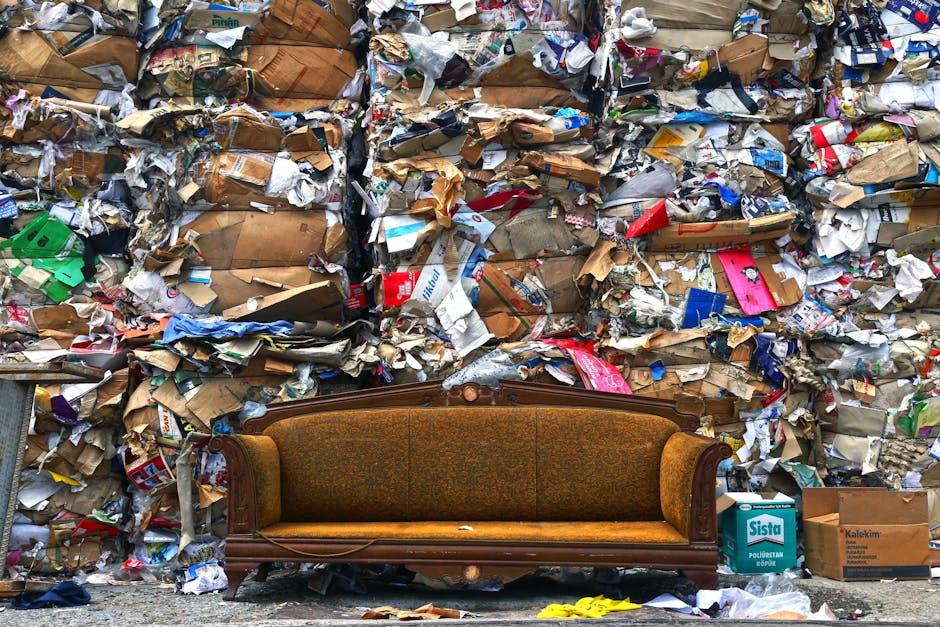
Guide to sofa disposal near Archway Tower (N19)
If you are staring at an old sofa in a flat near Archway Tower, you probably want it gone sooner rather than later. Maybe it is sagging in the middle, blocking a hallway, or simply too bulky to move without a second pair of hands. This guide to sofa disposal near Archway Tower (N19) walks you through the practical options, local considerations, and the small details that make the difference between a smooth collection and a stressful day. Truth be told, sofa removal sounds simple until you are trying to fit a three-seater through a narrow stairwell at 7:30am.
Below, you will find a clear step-by-step process, the main disposal methods, what to check before booking, and how to avoid the usual headaches. If you are comparing wider clearance options too, you may find it helpful to look at furniture disposal and furniture clearance as part of your planning.
Why sofa disposal near Archway Tower (N19) matters
Sofa disposal matters more than people think because sofas are awkward, heavy, and often not suitable for ordinary household bins. In a busy London setting like Archway, the challenges are even more obvious: tight entrances, shared stairwells, parking restrictions, and limited storage space while you wait for collection. A sofa left in a communal hallway can become an obstruction fast. And if you are between tenants, moving home, or clearing a property, delay tends to create more delay. One old sofa can quietly become the thing holding up the whole job.
There is also the question of responsible disposal. A sofa might contain mixed materials, fire-retardant fabric, timber, foam, metal frames, and sometimes detachable parts that can be separated for recycling. Throwing it out carelessly is not just messy; it can also lead to unnecessary waste. Most readers want a straightforward solution that is safe, compliant, and not wildly expensive. That is exactly the point of planning ahead.
Near Archway Tower, practicality is everything. If you can get the item out without damaging walls, blocking neighbours, or paying for a second visit, you are already ahead. A little organisation now saves you a lot of shuffling later.
How sofa disposal works
At a simple level, sofa disposal means arranging for the item to be removed from your property and taken to a suitable destination, such as a reuse channel, recycling facility, or waste transfer route. In real life, the process can vary depending on the sofa size, access, the condition of the item, and how quickly you need it gone.
Most people around Archway Tower end up choosing one of a few broad routes:
- Book a collection service: a team removes the sofa from inside the property and transports it away.
- Use a council collection or bulky waste route: suitable for some households, though timing and handling can be less flexible.
- Take it to a reuse or disposal point yourself: practical only if you have the right vehicle and enough help.
- Arrange a full clearance: useful if the sofa is part of a larger flat, office, or home clearance.
The best route depends on convenience, time, and the condition of the furniture. If the sofa is clean and usable, reuse is often worth exploring first. If it is damaged, stained, infested, or broken beyond repair, removal for recycling or disposal may be the more realistic option.
There is a simple rule of thumb here: the harder the access and the bigger the sofa, the more value you get from a professional collection. Especially in apartment buildings, the difference between a DIY move and an organised removal can be surprisingly large. A van parked legally, a crew that knows how to carry bulky items, and a plan for dismantling if needed - that is what turns a headache into a quick job.
Key benefits and practical advantages
The obvious benefit is getting the sofa out of the way. But there are several other practical advantages that matter just as much.
- Less physical strain: sofas are awkward rather than simply heavy, and the shape is often the real problem.
- Lower risk of damage: professional handling reduces the chance of scuffed walls, snapped skirting boards, or broken glass panels on the way out.
- Better time control: you are not waiting around for a vague all-day slot if you choose a more flexible collection option.
- Cleaner outcome: many services will collect the item from inside the property, which is a relief if the sofa is wedged into a corner or up a flight of stairs.
- More responsible disposal: reusable parts can be separated, and viable materials can be diverted away from landfill where possible.
For tenants, this can help with end-of-tenancy deadlines. For landlords and agents, it keeps the turnover process moving. For homeowners, it simply clears space so the room feels usable again. There is something oddly satisfying about seeing a room breathe again once a bulky sofa has gone. The space changes. The light changes too, especially in compact London flats where one item can dominate everything.
Expert summary: The best sofa disposal option is usually the one that balances access, speed, safety, and responsible handling. If any of those four elements is missing, the job tends to become more complicated than it needs to be.
Who this is for and when it makes sense
This guide is useful if you are:
- moving out of a flat near Archway Tower and need the sofa removed before handover
- replacing old furniture after redecorating or refurbishing a room
- dealing with a damaged, broken, or unsalvageable couch
- clearing a rental property, probate property, or shared house
- upgrading office or reception furniture and need the old seating taken away
- trying to free up storage space in a basement, loft, garage, or spare room
It also makes sense if you have already tried the "I will deal with it next weekend" strategy. Let's be honest, that sofa has probably won that game already. If you cannot move it safely on your own, or if your building layout makes access awkward, it is usually time to stop improvising and choose a proper removal plan.
Sometimes the trigger is not urgency but friction. The sofa is not just old; it is in the way of everything else. You cannot fit the new bed in, the cleaner cannot get behind it, or the hallway starts to feel cluttered and cramped. That is often the moment people decide it is worth sorting properly.
Step-by-step guidance
If you want sofa disposal near Archway Tower (N19) to go smoothly, this is the sequence that tends to work best.
1. Measure the sofa and the access route
Measure the length, height, and depth of the sofa. Then check the route out of the property: door widths, stair turns, lift dimensions, and any sharp corners. If the sofa was brought in assembled, it may still fit out intact - but do not assume. A five-minute check can save a very awkward morning.
2. Decide whether the sofa can be reused
If it is in decent condition, consider whether it could be passed on, donated, or reused. Even when you are ready to part with it, the item may still have value for someone else. If the fabric is torn, the frame is damaged, or the cushions have collapsed, disposal is more likely the best route.
3. Separate removable parts
Take off cushions, feet, detachable arms, or loose cushions if that makes the move easier. Small parts reduce weight and improve grip. It also helps crews move the frame without snagging on doorways. A surprisingly large number of sofa removal problems start with one stubborn leg.
4. Clear the path
Move side tables, shoes, lamps, and anything else that might trip someone or get knocked over. If you live in a shared building, give neighbours a bit of warning if the route will be tight. In a communal stairwell, good manners go a long way.
5. Choose the right disposal method
Match the method to the job. A single lightweight sofa may be straightforward. A large corner sofa in a second-floor flat with no lift is another story entirely. If you want convenience and less lifting, a collection service is often the easiest option. If you are already coordinating a larger clear-out, it may make sense to bundle the sofa into a broader furniture or home clearance arrangement.
6. Confirm timing and access
Make sure the vehicle can stop legally and safely nearby, especially in a busy London street. If there are building codes, booking slots, concierge rules, or lift restrictions, get those sorted in advance. Little details matter. They always do.
7. Check what happens after collection
Ask how the sofa will be handled. Responsible services will usually separate reusable and recyclable materials where possible, rather than treating every item the same. If sustainability matters to you, this is a sensible question to ask.
Expert tips for better results
A few small decisions can improve the whole experience.
- Photograph the sofa first: this helps you describe size, condition, and any damage clearly when arranging collection.
- Measure doorways, not just the sofa: people often forget this part, then wonder why the angle is impossible.
- Book earlier in the day if you can: buildings tend to be quieter, lifts are less busy, and daylight makes awkward manoeuvres easier.
- Keep cushions and accessories together: otherwise they end up scattered around the flat like a small upholstery migration.
- Ask about dismantling: some sofas need minor disassembly to leave safely. Better to know before collection day.
One practical insight from experience: it is usually the route, not the sofa, that creates the challenge. A room on paper can look fine, but once you factor in a narrow hallway, a handrail, a turn in the stairwell, and a front door that does not open fully, things change quickly. If you picture the whole journey from room to van, you make smarter choices.
Another useful habit is to keep a little flexibility in the plan. If the sofa is too large to remove intact, a team may need to split it down. That is normal. Not ideal, perhaps, but normal.
Common mistakes to avoid
Most sofa disposal problems are avoidable. The usual mistakes are not dramatic, just irritating and time-wasting.
- Assuming the sofa will fit through every doorway: it might not.
- Leaving booking too late: especially risky if you have a move-out deadline.
- Forgetting building restrictions: some blocks have access rules, parking limits, or time windows.
- Not checking the sofa's condition: damaged frames or contaminated upholstery can change the disposal route.
- Skipping the path clear-out: this is how scuffed walls and stubbed toes happen.
- Trying to move a bulky sofa alone: that is where backs, corners, and temper all get tested.
There is also a softer mistake: picking the cheapest-looking option without checking what is actually included. A low headline price is not much use if the sofa needs extra labour, stair carrying, or dismantling and those costs appear later. Better to understand the full picture before you commit.
And yes, the old "it will probably be fine" approach. It rarely is. Not in a third-floor flat, anyway.
Tools, resources and recommendations
You do not need a van full of specialist gear, but a few practical tools can make sofa disposal much easier.
Helpful tools
- tape measure
- work gloves
- moving blankets or old sheets
- basic screwdriver or hex key if the sofa can be dismantled
- strong bin bags for loose cushions or packaging
- trolley or dolly only if the surface and route are suitable
Useful planning resources
If the sofa is part of a larger clear-out, it may be worth thinking beyond the single item. Related services such as home clearance, flat clearance, and house clearance can make sense when multiple rooms need attention. For office or commercial seating, office clearance and business waste removal may be the better fit.
If sustainability is important to you, look into providers who explain their recycling approach clearly. A simple, transparent recycling and sustainability policy is often a good sign that the service takes waste handling seriously.
If you need to compare costs or understand what affects pricing, it helps to review pricing and quotes before booking. Clear pricing matters more than fancy wording. It just does.
Law, compliance, standards, or best practice
For sofa disposal in the UK, the main point is to make sure waste is handled lawfully and responsibly. You do not need to become a legal expert to do that, but a basic understanding helps.
Best practice usually means:
- using a licensed and insured removal provider where appropriate
- avoiding fly-tipping or leaving bulky waste in unauthorised places
- making sure access and lifting are carried out safely
- asking how reusable or recyclable materials will be handled
- keeping records or confirmation for landlord, tenant, or business purposes if needed
If the sofa came from a rented property, shared building, or commercial setting, additional obligations may apply through tenancy terms, managing agents, or workplace policies. In those situations, documentation is not just paperwork; it is evidence that the job was handled properly.
Health and safety also matters. A damaged sofa can have sharp staples, exposed springs, or awkward weight distribution. Manual handling is where many avoidable injuries happen, so a careful lift and clear route are not optional. Providers that publish their health and safety policy and insurance and safety details usually give more reassurance, especially for tougher access jobs.
For broader trust signals and service standards, it can also help to review company information such as about us before booking. Not because a polished page guarantees anything, but because transparency is usually a good sign.
Options, methods, or comparison table
Here is a straightforward comparison of the most common sofa disposal methods near Archway Tower.
| Method | Best for | Pros | Watch out for |
|---|---|---|---|
| Professional collection | Most households, flats, and tight-access properties | Convenient, less lifting, flexible, can include inside removal | Price varies by access, size, and urgency |
| Council bulky waste route | People with time and straightforward disposal needs | Official route, useful for some standard items | May have longer lead times and less flexibility |
| Self-transport | Those with a suitable vehicle and help | Can be cost-effective if everything aligns | Heavy lifting, parking, and damage risk |
| Part of a full clearance | Moves involving multiple rooms or mixed items | Efficient for bigger jobs, fewer separate bookings | May be more than you need for a single sofa |
For many readers, the answer depends on access. If you live in a modern block with lift access and parking nearby, self-transport may be manageable. If you are in a narrow older building with no lift, a professional removal usually makes far more sense. That is the honest version, not the glossy one.
Case study or real-world example
A typical Archway scenario looks like this: someone is moving out of a two-bedroom flat and has a three-seater sofa that will not be taken to the new place. The sofa is in decent condition, but the building has a narrow stairwell and a shared entrance. The resident first assumes friends can help carry it out after work. Then the diary starts to wobble, everyone is tired, and the sofa still needs shifting by Friday.
In that kind of situation, the smart move is to measure the sofa, check the access route, and arrange a removal with enough notice to avoid last-minute pressure. If the sofa is part of a broader clear-out, combining it with other items can be much simpler than treating it as a one-off problem. The best outcome here is not just removal. It is removal with no chipped walls, no neighbour complaints, and no panic on the day.
That is often how these jobs go in real life. Not dramatic, just busy. A bit of planning changes everything.
Practical checklist
Use this checklist before the sofa is collected or moved:
- Measure the sofa and all access points
- Confirm whether any parts can be removed
- Clear the route from room to exit
- Check lift size, stair turns, and doorway widths
- Confirm parking or loading access
- Decide whether the sofa is reusable or disposable
- Ask how the item will be handled after collection
- Keep any booking notes, reference numbers, or confirmation messages
- Protect flooring and walls if the route is tight
- Make sure someone is available at the agreed time
Practical takeaway: the more you prepare in advance, the less stressful the collection becomes. Simple as that. A sofa is just furniture until it is stuck in a hallway, and then it becomes a logistics problem.
Conclusion
Sofa disposal near Archway Tower (N19) does not need to be complicated, but it does need a bit of common sense. Once you think through access, timing, lifting, and disposal route, the whole job becomes much easier to manage. Whether you are clearing a flat, replacing a worn-out couch, or handling a last-minute move, the right approach is the one that keeps the process safe, compliant, and as hassle-free as possible.
If the sofa is large, awkward, or part of a broader clearance, professional help is often the quickest way to get the result you want without messing about. And if you are still weighing up the best option, start by comparing the furniture's condition, your access route, and the time you actually have. That little reality check goes a long way.
Get a free quote today and see how much you can save.
Once the old sofa is gone, the room feels lighter. Cleaner. Ready for whatever comes next.
Frequently Asked Questions
How do I dispose of a sofa near Archway Tower (N19) quickly?
The fastest route is usually a collection service that can remove the sofa from inside your property. If access is straightforward and you can provide measurements in advance, the process is typically smoother.
Can a sofa be collected from a flat with no lift?
Yes, often it can. The key is accurate information about stair width, turns, and any tight landings. If the sofa is especially bulky, it may need partial dismantling.
What should I check before booking sofa removal?
Check the sofa's dimensions, access route, parking/loading arrangements, and whether the item is still reusable. Also confirm what the service includes so there are no surprises later.
Is it better to reuse or dispose of an old sofa?
If the sofa is clean, structurally sound, and safe to use, reuse is usually preferable. If it is damaged, stained, or uncomfortable beyond fixing, disposal is the practical choice.
How much does sofa disposal usually cost?
Pricing varies based on size, access, location, and whether the item is part of a larger clearance. For a realistic picture, compare quotes rather than guessing from headline prices.
Can I leave a sofa on the pavement for collection?
No, not unless you have arranged an authorised collection method that specifically allows it. Leaving bulky waste in an unauthorised place can create problems, so it is best avoided.
Do I need to dismantle my sofa first?
Not always. Some sofas leave intact, while others are easier and safer to move in pieces. If the access route is tight, dismantling can make a big difference.
What happens to the sofa after it is collected?
That depends on its condition and the provider's process. Some items may be reused, some recycled, and some sent for disposal if they cannot be recovered.
Is sofa disposal safe for flats and shared buildings?
Yes, provided the route is planned properly and the item is handled carefully. Communal areas should be protected, and the move should not block neighbours or create hazards.
Can other furniture be taken away at the same time?
Usually, yes. In fact, bundling the sofa with other unwanted furniture is often more efficient than arranging separate removals for each item.
What if my sofa is water-damaged or infested?
Tell the provider in advance. Damage, contamination, or pest concerns can affect how the item is handled, and transparency helps avoid wasted time on the day.
Where can I find more information about responsible waste handling?
You can review provider pages about waste removal, sustainability, safety, and pricing. If you are comparing broader options, waste removal is a useful starting point alongside service pages for furniture and clearance.