Office Clearance in Archway

Office Clearance Archway provides a practical office clearance service in Archway for businesses that need desks, chairs, filing, mixed furniture and general workplace items removed in an organised way. The focus is on creating a clear, workable space without unnecessary disruption, whether the task involves a single room, a whole floor or a phased clear-down arranged around your schedule. We handle the day-to-day realities of office clearances with careful sorting, sensible loading and a straightforward approach to removal.
The work can include a wide range of office contents, from reception furniture and storage units to redundant IT peripherals, archive boxes and miscellaneous workplace items that have built up over time. Where useful, we can separate materials for reuse, recycling or disposal, depending on what the clearance contains. If you are planning a move, downsizing, refurbishing or closing a workspace, it helps to know what can be kept aside, what should be removed first and which parts of the job need a more detailed plan.
For many commercial customers, the most useful first step is simply to identify the areas that need attention and the type of items involved. That gives a clearer picture of access, lifting, timing and any contents that require particular handling. If you already know the general scope, you can use that to request a quotation and decide how best to stage the clearance. Tell us what needs removing and we can help shape a practical plan.
Workplace items we remove
Office clearances are rarely limited to one type of item, so a proper service needs to cope with a mixture of furniture, soft furnishings, paperwork, fixtures and bulky waste. In many offices, the most time-consuming part is not the physical lifting but deciding what belongs with the clearance and what should stay in place. A good clearance plan treats the room as a working environment first, not just a pile of objects to be shifted, which helps protect useful equipment and avoid accidental disruption.
Typical items can include desks, pedestal drawers, meeting tables, shelving, cupboards, stackable chairs, partition pieces and reception furniture. In addition, there may be archive material, general waste, packaging from office moves, old display units or worn-out items that no longer fit the space. We can also deal with office-related clutter in storage areas, side rooms and back-of-house spaces, which often need a separate sweep once the main working area has been cleared.
Choosing the right scope matters because office clearances can range from a light tidy-out to a substantial removal that touches multiple rooms. If you are arranging a wider workplace change, it may help to think about the parts of the site that need different handling, such as reusable furniture, confidential paperwork, IT equipment and items destined for disposal. Plan the clearance by area rather than item by item if that makes the job easier to organise.
Furniture, fixtures and storage

Furniture is often the largest part of an office clearance, both in volume and in practical handling. Desks and storage units can be awkward to move through tight corridors, stairwells or shared entrances, so the route out of the building matters as much as the items themselves. Where furniture is dismantled, protected or stacked depends on its condition and on how the clearance needs to progress through the premises.
We can deal with common office furniture such as workstations, conference tables, filing cabinets, shelving, reception seating and task chairs. Some items are suited to reuse, while others are more practical to remove for disposal because of damage, age or structural wear. If there are fixed or semi-fixed elements in the room, a clear description of what needs taking out and what must remain in place helps avoid confusion during the job.
It is often useful to separate the clearance into a few obvious groups before work begins:
- general office furniture and loose fixtures
- storage and archiving items
- soft furnishings and mixed bulky waste
- items for sorting, reuse or disposal
Desk clearances and working areas
Desks often need careful attention because they tend to hold a mixture of papers, accessories, small office devices and personal workplace contents. In a clearance, the aim is not simply to empty a surface but to remove what is no longer required while protecting anything that should be retained. That may mean handling desk pedestals, monitor stands, cable clutter and under-desk items with a little more planning than a standard furniture removal.
Clearances of this kind are especially useful when a business is reconfiguring its floor plan, closing a department or preparing a room for refurbishment. The removal stage is easier when the desk area has already been checked for loose contents, obvious valuables and items that need to be set aside. We can then deal with the physical lifting and removal in a more orderly way, which is particularly important when a room contains several workstations side by side.
Good preparation does not need to be complicated. A short list of what stays, what goes and what is uncertain can save time later and help avoid unnecessary handling. Clear instructions are often more valuable than a long explanation, especially where the space is busy or the schedule is tight. If you need a quotation, start by outlining the desk areas involved and the type of furniture or contents present.
Archive rooms and paper-heavy spaces

Many office clearances involve more than visible furniture. Archive rooms, storage cupboards and back offices often contain boxes, files, reference material and mixed paper waste that must be separated from reusable office contents. These areas can be straightforward once they are assessed, but they still benefit from a methodical approach because the contents are frequently dense, stacked tightly or mixed with equipment and shelving.
Where a room contains archived material, the key decision is often whether the contents are to remain on site, be moved elsewhere within the business or be removed as part of the clearance. A careful approach also helps when paper records are mixed with folders, ring binders, stationery, packaging and outdated office supplies. The more clearly these items are described in advance, the easier it is to plan the right level of labour and loading for the job.
Some businesses prefer to keep the clearance focused on the physical removal while making their own decisions about record retention before the work begins. Others want the room stripped back in one visit so it can be repurposed quickly. Either way, the process works best when the contents are understood as a collection of categories rather than a single mass of waste. That is usually the point at which a quotation becomes more reliable. Make a short contents list and use it to guide the next step.
What affects the quotation
Office clearance pricing is usually shaped by a few practical factors rather than one simple measure. The main ones are the amount of material to remove, the ease of access, whether items need dismantling and how much sorting is involved. A tidy room with clear access is very different from a compact storage area on an upper floor, and that difference matters when planning the labour and time needed for the job.
It also helps to think about the mix of contents. A clearance dominated by light office furniture may be simpler than one that includes heavy filing cabinets, dense archive boxes or awkwardly positioned items. If you are asking for a price, describing the site layout and the type of objects involved gives a better basis for estimating the work. Photographs can be useful too, especially when the clearance contains a range of items in different rooms or storage areas.
A concise enquiry is usually enough to begin. Let us know what type of office space you have, what you want removed and whether there are any access details that could affect the job. Access notes, floor level and item mix are all practical details that can improve the accuracy of the quotation. If you are ready to take the next step, request a quotation with the room list and the main contents.
Planning the clearance
A well-planned office clearance starts with a basic review of the space. That means identifying the rooms involved, separating retained items from removal items and deciding whether the job needs to be done all at once or in stages. For some businesses, the best approach is to clear shared areas first and leave individual rooms for later; for others, it is simpler to empty the whole space in one organised visit.
It is also helpful to consider any items that need a more careful handover, such as documents, equipment or furniture that may be moved within the business rather than removed from the premises. The clearer the plan, the easier it is to keep the clearance moving without unnecessary pauses. Where several people are involved in managing the site, one agreed point of contact can make instructions much easier to follow.
When preparing the enquiry, keep the focus on the practical facts rather than the background story. A short note covering the number of rooms, the type of contents and any restricted access is often enough to start the conversation. One clear plan is more useful than a long list of repeated instructions, particularly when the clearance includes furniture, archives and mixed office waste.
About Archway
Archway is a north London district within the London Borough of Islington, located around the junction of Holloway Road and Highgate Hill, where the main road rises towards Highgate. Its name is linked to the historic toll gate and arch that once marked the route, and the area has long been shaped by movement through the capital as much as by local residential life. The district sits close to both Upper Holloway and Highgate, with a street pattern that reflects the blend of main-road frontage, side roads and steeper residential streets climbing away from the high road. This mix gives Archway a distinct character, with busy transport corridors running alongside quieter local lanes and long-established housing. The area is served by Archway Underground station on the Northern line, which makes it one of the better-connected parts of Islington for north–south travel. Nearby, Waterlow Park offers open green space on the edge of Highgate, while Whittington Park provides another important local open area closer to the centre of the district. The surrounding streets contain a range of building styles, from later Victorian and Edwardian terraces to more modern commercial and residential developments, and the elevated roads and slopes give the neighbourhood a varied urban feel. Archway also has links to local healthcare history through the Whittington name, with the area historically associated with St Bartholomew’s and the wider medical presence around Highgate Hill. Today it remains a busy, practical part of inner north London, with everyday shopping, transport interchange and residential life all closely interwoven.
Clearances for moves, refurbishments and closures
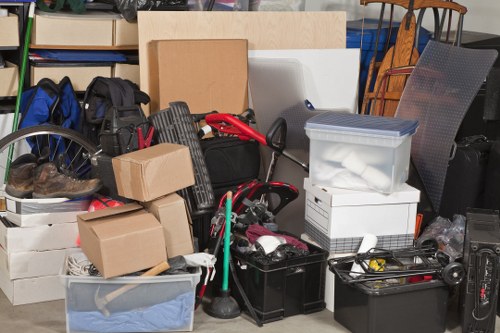
Office clearance work often sits alongside a wider change in the way a business uses its space. A team may be moving to a different floor, reducing the size of its premises or preparing rooms for new tenants or internal refurbishment. In each case, the clearance needs to be organised so that the removal of unwanted contents supports the next stage of the project rather than creating extra work for it.
That can mean working through a building in a sensible order, starting with the items that are no longer needed and leaving any retained equipment or furniture accessible for later use. It can also mean removing furniture from rooms that will be stripped out, while leaving adjoining areas untouched until they are ready. The more orderly the sequence, the easier it is to keep the site usable during the transition.
Where a closure is involved, the practical details become even more important because there may be a larger mix of furniture, archives, workstation contents and leftover office materials. Clear instructions about what stays on site, what goes and what should be handled separately are valuable at this stage. If the project is time-sensitive, a simple breakdown of the rooms and items involved is the best place to begin. Tell us the scope clearly and the rest can be arranged around it.
Sorting, reuse and responsible disposal
Not everything in an office clearance needs to be treated the same way. Some contents may still have use, some may be suitable for recycling and some will simply need to be removed as mixed waste. A thoughtful clearance service keeps those categories separate where possible, which helps avoid unnecessary disposal of items that could be reused or processed in a more suitable way.
This is particularly relevant where the clearance includes office chairs, storage units, desks or other substantial items that may still have a second life depending on their condition. It is also useful in spaces with a mix of office waste and general rubbish, since each type of material may call for a different handling approach. A clear separation at source makes the job more orderly and can reduce confusion when several kinds of item are present.
Responsible handling is not just about the final destination of the items; it is also about how the job is carried out. Goods should be sorted with attention to what is reusable, what needs dismantling and what should be removed as waste. Separate the obvious keepers early and the clearance becomes easier to manage from the outset. If you want a quotation, include anything that may need special sorting.
How to request a quotation

A quotation for office clearance is easiest to prepare when the basic facts are laid out clearly. The main points are the rooms involved, the items to be removed, whether there are stairs or other access restrictions and whether any contents need dismantling or sorting before removal. This does not need to be written as a formal inventory; a straightforward description is usually enough to begin.
It is also sensible to mention whether the job is a one-off clearance or part of a wider sequence of works. If you have multiple areas, set them out in a simple order so that the most important spaces are obvious. A brief set of photographs can help where the contents are varied or where the access route is likely to influence the work, but a written summary remains the best foundation for an accurate estimate.
To move forward, send the details that matter most and ask for a quotation based on the actual scope. If you are ready to proceed, contact us and tell us what needs clearing, or use the pricing and quotes page if you want to frame the enquiry around the job size. Keep it simple, include the key facts and request a quotation when you are ready.